
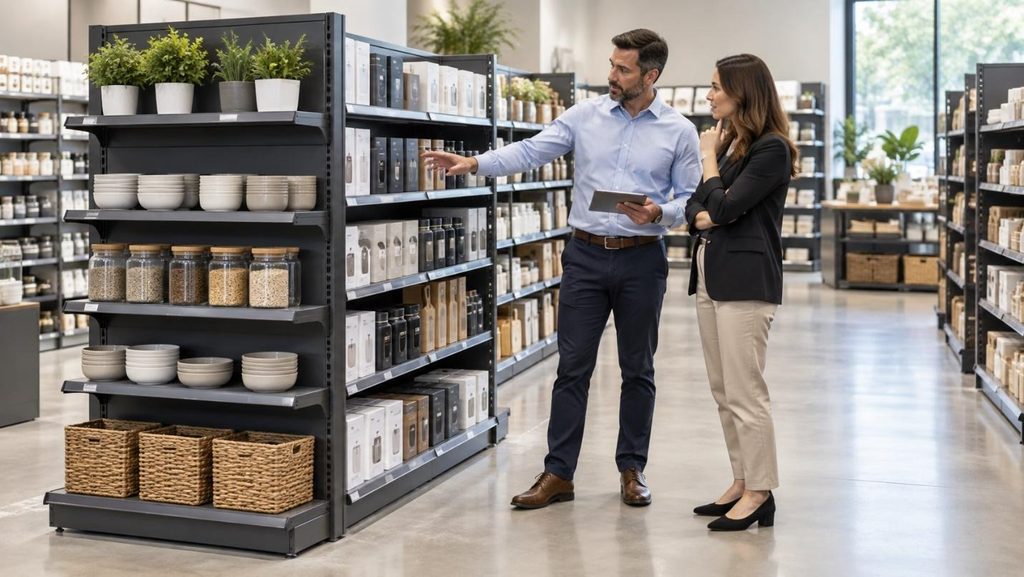
Gondola shelving is one of the most widely used fixture systems in retail because it offers a practical way to display products while making efficient use of available floor space. However, choosing the right shelving is only part of the decision. The supplier behind the system can have just as much impact on its long-term value.
Price is naturally important, but retailers should also consider durability, availability, flexibility, replacement parts and the supplier’s experience with commercial retail environments. A shelving system may remain in a store for years, so the purchasing decision should account for what happens well after the initial fit-out.
Start With the Quality and Expected Lifespan
The first consideration should be whether the shelving is built for continuous commercial use.
Retail fixtures are exposed to repeated loading, restocking, customer contact and layout changes. Over time, lightweight or poorly constructed components can bend, loosen or become difficult to maintain.
Ask the supplier about the materials used, shelf load capacities, finishes and expected service life of the system. It is also worth examining how securely shelves and accessories connect to the uprights and whether the complete installation remains stable when fully stocked.
The cheapest system at the quotation stage is not necessarily the lowest-cost option over its lifetime. Replacing damaged or worn fixtures earlier than expected can create additional purchasing, freight and installation costs.
Make Sure the System Can Adapt as the Store Changes
Very few retail stores remain exactly the same for years.
Product ranges expand, categories move, seasonal displays change and retailers often adjust layouts in response to customer behaviour or new merchandising priorities. Shelving therefore needs to accommodate change without requiring the entire fixture system to be replaced.
Modular systems allow retailers to reposition shelves, introduce hooks or accessories, extend existing runs and alter product presentations as requirements change. Retailers considering long-term flexibility can evaluate systems such as Mills’ gondola shelving, which can be configured for different retail layouts and merchandising requirements.
Before purchasing, ask how easily the system can be modified and whether new components will remain compatible with the original installation.
Check Product Availability and Lead Times
Availability can become particularly important when opening a new store or completing a refurbishment within a fixed schedule.
A shelving supplier may offer the right product, but long manufacturing or import lead times can still cause problems if fixtures are not available when contractors or store teams need them.
Ask whether the supplier carries stock locally and how quickly common sizes and components can be dispatched. Retailers operating multiple locations should also determine whether sufficient quantities can be supplied for staged or multi-site rollouts.
Delays in shelving supply can affect more than the fit-out schedule. An incomplete store layout can prevent stock from being displayed properly and may delay when an area of the store becomes fully operational.
Consider the Range of Sizes and Accessories
A useful gondola system should provide more than a single standard configuration.
Different stores have different ceiling heights, aisle widths, product dimensions and display requirements. A supplier with a broader product range gives retailers more flexibility when designing the original store and when making adjustments later.
Look for options such as different bay widths and heights, single-sided wall units, double-sided aisle units, end bays, adjustable shelves and merchandising accessories.
The availability of hooks, baskets, ticket strips and other accessories can also determine how effectively the same shelving system can accommodate different categories.
Choosing a system with a broad range of compatible components can reduce the need to introduce unrelated fixture types as the store evolves.
Evaluate the Supplier’s Retail Experience
Gondola shelving is relatively simple in principle, but using it effectively requires an understanding of how retail stores operate.
A supplier with experience across retail environments is more likely to understand issues such as aisle planning, merchandising density, product accessibility, restocking requirements and future expansion.
Based on experience supplying Australian retail environments, Mills Shelving has observed that shelving decisions are generally more effective when retailers consider future configuration and replacement requirements during the original fit-out rather than treating them as problems to solve later.
A supplier should be able to discuss how the system will work within the practical requirements of the store, rather than simply providing a catalogue of available fixtures.
Ask About Replacement Parts
Replacement-part availability is easy to overlook when purchasing new shelving.
Several years after installation, however, individual shelves, brackets, uprights or accessories may need to be replaced. A retailer may also want to add another bay or expand an existing aisle.
If the original system has been discontinued or uses difficult-to-source proprietary components, even a relatively minor store change can become expensive.
Before purchasing, ask whether individual components can be ordered separately, whether new parts are expected to remain compatible with the existing system and how the supplier supports installations over the longer term.
A modular system becomes considerably more valuable when individual parts can be replaced without removing an entire shelving run.
Compare Total Cost Rather Than the Initial Quote
Two shelving quotes can appear very different on price while delivering very different value over time.
Rather than comparing only the initial equipment cost, retailers should consider the full lifecycle of the shelving.
This includes durability, freight, installation, maintenance, replacement parts and the cost of modifying the system during future store changes.
For example, shelving that lasts longer and allows individual components to be replaced may avoid the cost and disruption associated with a complete fixture replacement. Similarly, a modular system that can be expanded may allow a retailer to respond to growth without purchasing an entirely new setup.
The more frequently a business expects to modify its store, the more important this flexibility becomes.
Choose a Supplier That Understands Commercial Retail Requirements
Retail shelving exists within a wider operational environment.
Fixtures need to support stock presentation while preserving customer movement, staff access and practical restocking. They may also need to integrate with checkouts, refrigeration, promotional areas and other store infrastructure.
Mills Shelving works with retailers across different store formats, making practical considerations such as configuration, durability and future adaptability important parts of the shelving decision.
The broader Australian retail sector, represented by organisations such as the Australian Retailers Association, operates in an environment where businesses continually need to balance customer experience with operating and infrastructure costs. Store fixtures form part of that equation because poor purchasing decisions can create unnecessary replacement or refit expenses later.
Expert Insight: Think Beyond Opening Day
According to Neil Webster, CEO of Mills Shelving, retailers should consider how their shelving will perform several years after the initial installation rather than focusing only on how it looks when the store opens. A good system should allow the retailer to adjust shelf positions, introduce new product categories, replace individual components and expand existing runs without requiring a major fixture replacement. That adaptability can make the original shelving investment considerably more practical as the store and its product range evolve.
Questions to Ask Before Choosing a Supplier
Before committing to a gondola shelving supplier, retailers should ask practical questions about both the product and the support available behind it.
Consider asking:
- How long is the shelving designed to remain in commercial use?
- What stock is currently available?
- What are the typical delivery times?
- Can individual shelves, brackets and other parts be purchased separately?
- Can existing shelving runs be extended later?
- What heights, widths and configurations are available?
- Which merchandising accessories are compatible with the system?
- Does the supplier have experience with similar retail environments?
- What installation support is available?
- Can the system be reconfigured if the store layout changes?
The answers can reveal whether a supplier is focused only on completing the initial sale or can support the shelving system throughout its working life.
Choosing for the Long Term
Choosing a gondola shelving supplier should involve more than comparing the lowest quoted price.
Durability, availability, modularity, replacement-part support and retail experience all influence how useful the system will remain over time. A shelving system that can adapt as product ranges and layouts change may also reduce the need for costly fixture replacements during future refurbishments.
For retailers planning a new store or upgrading an existing one, the strongest purchasing decision is usually the one that considers both today’s fit-out requirements and the changes the business may need to make several years from now.