
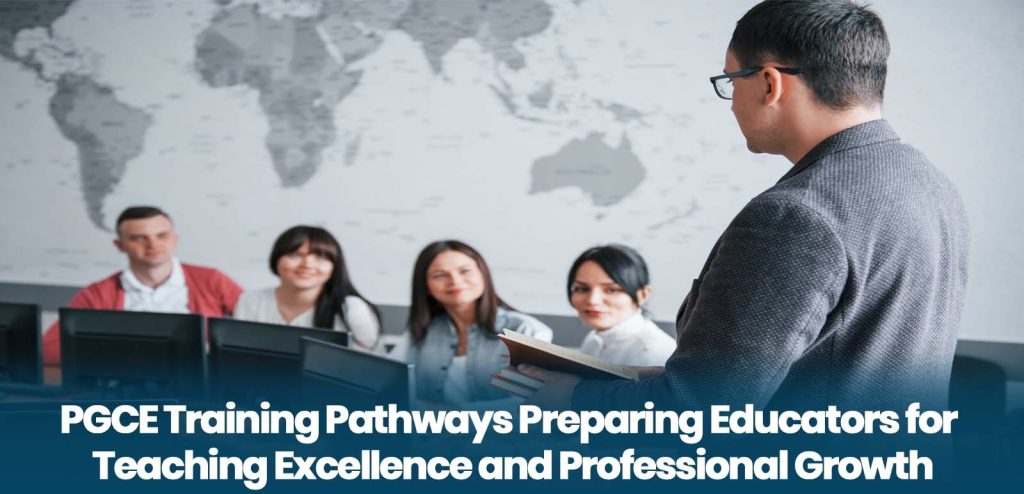
Education transforms lives, but only when teachers are prepared to inspire. PGCE Training Pathways stand as the foundation for equipping educators with the skills, confidence, and resilience needed to thrive in modern classrooms.
These structured courses strike a balance between theoretical study and hands-on practice, ensuring that every trainee develops both competence and creativity.
Reflective Practice in Teacher Training
Reflection is one of the key elements of the PGCE pathway, as it gives educators the opportunity to assess how well they teach and adapt to learners’ needs. Reflection helps teachers understand their strengths and weaknesses and continually improve.
Through constant self-evaluation, educators can track learners’ progress and create conditions for learning. Through reflection, PGCE pathways help develop such qualities as resilience and adaptability.
Building Pedagogical Expertise
Pedagogic skills provide the very foundations of a PGCE course. Candidates learn how to manage a class well, differentiate instruction, and teach inclusively. The ability to do so helps educators reach students irrespective of their background or intellectual abilities.
For those balancing study with personal commitments, assignment help becomes a valuable resource, offering guidance that supports academic success alongside professional development. Communication is another key aspect of a PGCE route that does not focus solely on subject knowledge.
Collaboration and Peer Learning
Collaboration is also a characteristic of PGCE routes. The trainees collaborate with their mentors, peers, and veteran teachers and learn about different teaching approaches. The collaboration helps the trainees establish professional conversations through which they can exchange opinions and give feedback.
Through collaboration with others, the trainees broaden their outlook and gain self-confidence in their teaching approach. The collaboration is like teamwork in school settings, where teachers must work together to ensure students’ success across various disciplines.
Inclusivity in Modern Classrooms
PGCE Training Pathways highlight the importance of inclusivity. Educators are trained to recognize diverse learning needs, cultural backgrounds, and social contexts. By being inclusive, the teacher creates a classroom environment where each learner is respected and valued.
Inclusivity not only promotes academic success but also promotes respect for one another among the learners. The PGCE program stresses that inclusivity is not just a choice but part and parcel of good teaching.
Assessment Literacy for Educators
Assessment literacy is an essential element of the PGCE process. Students are trained in how to develop, conduct, and analyze assessments that effectively measure learners’ progress. Assessment is not just about giving grades but helping teachers develop effective teaching techniques.
The PGCE program trains individuals to develop the right blend of formative and summative assessments so that assessment helps rather than hinders learning.
Research Literacy in Education
PGCE training also stresses the importance of research skills. Trainees work with educational research to gain skills in evaluating evidence and applying the findings in practice. It is an important ability that guarantees teaching is based on up-to-date information.
By cultivating research literacy, PGCE programs empower educators to innovate, adapt, and contribute to the broader educational community. Many trainees seek PGCE assignment help to refine their academic writing and strengthen their understanding of teaching methodologies.
Communication Skills for Educators
PGCE routes emphasize the significance of communication skills. Teachers should be able to convey their thoughts clearly, listen carefully, and foster dialogue with students, parents, and colleagues. Communication is not only important for delivering lessons but also helps establish relationships.
PGCE courses prepare future teachers to communicate in various ways, depending on the audience they address. Good communication skills improve teamwork, increase student engagement, and create a positive atmosphere in the school.
Lifelong Learning Mindset
Lifelong learning is another important aspect emphasized by the PGCE route. Teachers should be able to develop themselves through professional learning even after completing their initial training. This enables them to stay abreast of the latest developments in education.
PGCE programs instill this mindset, emphasizing that professional growth does not end with certification. For those managing multiple commitments, services like write my assignment provide practical assistance, ensuring academic success alongside professional training.
Emotional Intelligence in Teaching
The PGCE pathways focus on the importance of emotional intelligence, since it helps develop healthy teacher-student relationship. It involves the ability to control emotions, be empathic, and create an environment where children can feel safe. Emotional intelligence helps with better communication, prevents conflicts, and builds trust.
It is important to note that teaching is more than imparting knowledge to students, it is about establishing a personal connection with them. With proper development of emotional intelligence, teachers become capable of inspiring and encouraging cooperation in students.
Innovation in Teaching Practices
PGCE routes promote innovation, prompting educators to develop new ways and strategies. Innovation can take the form of incorporating technology, developing project-based learning, or devising inventive assessment strategies. Innovativeness is emphasized in PGCE courses because it makes teaching flexible and adaptive to new challenges.
By experimenting, teachers avoid becoming stagnant and continue improving. Through innovation, educators ensure that classrooms remain engaging and that students are prepared for today’s world.
Global Perspectives in Education
The Global Outlook is one of the PGCE pathways and focuses on the importance of global perspectives. This helps teachers develop global outlooks, allowing students to interact with different cultures and ideas. Global awareness makes teaching more meaningful, where global issues can be linked to local experiences.
The PGCE course recognizes that education transcends the boundaries of nationhood, as it belongs to the global conversation. The development of a global outlook among teachers equips students to become responsible global citizens.
Shaping Educators for Excellence
PGCE Training Pathways remain vital in preparing educators for teaching excellence and long-term professional growth. With the help of structured learning and reflective practice, they ensure that the teachers can flourish in different learning settings.
Through the help of these methods, teachers can really make their mark in the field of teaching and beyond. Indeed, PGCE training paves the way for teachers to create the next generation of inspired minds. Teachers start here, and education starts with teachers.